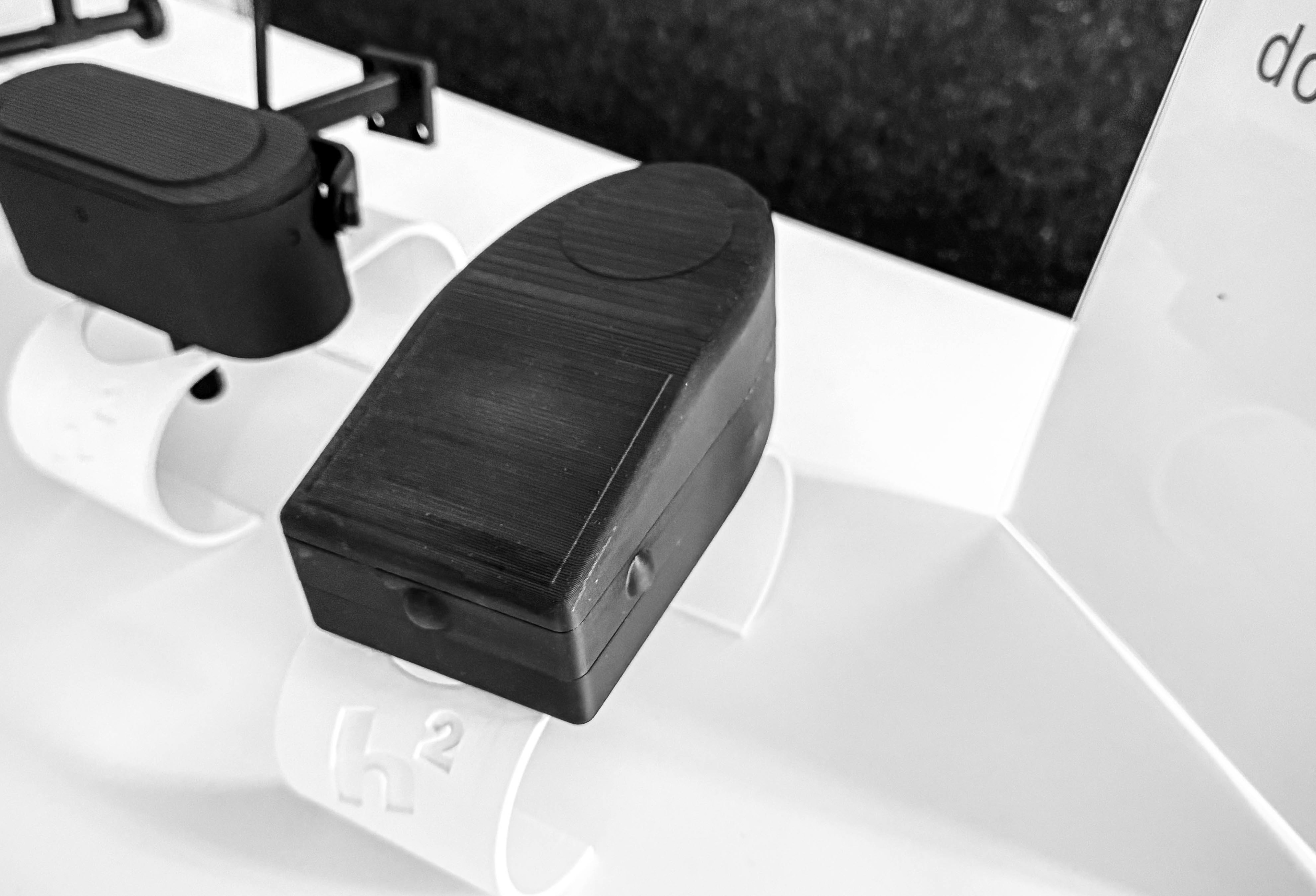
This project was developed during my exchange semester at Hochschule Magdeburg-Stendal, in collaboration with the German company Hometic IP. The objective was to design a modern weather station product that integrates seamlessly with smart home systems.
The device focuses on providing detailed outdoor environmental data, including temperature, rainfall, wind speed, and other weather conditions, using integrated sensors. Connected to a smart home interface, it allows users to monitor accurate, real-time weather information from inside their homes.


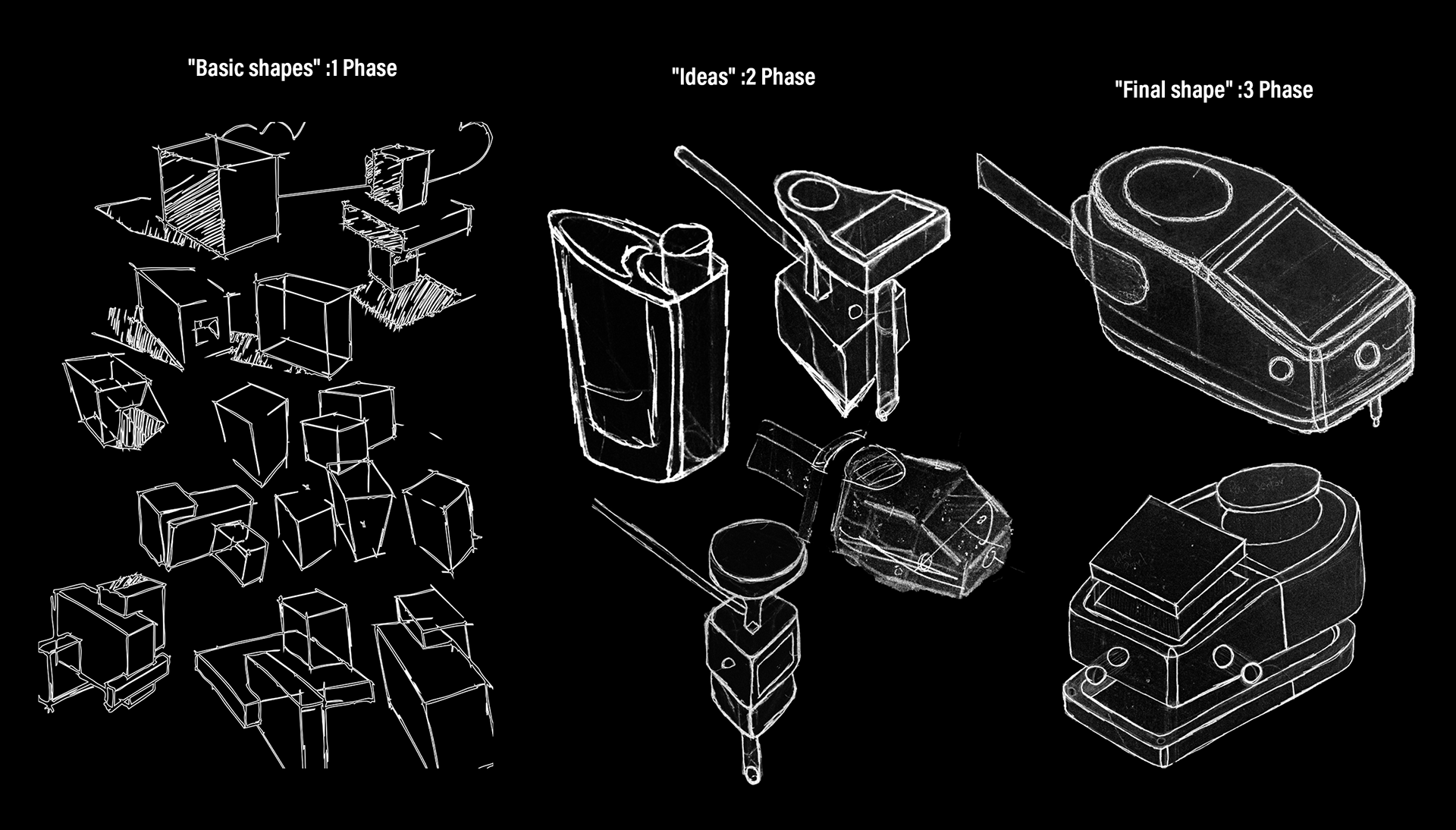
Sketch Development Process
The sketching phase started with understanding the number, size, and required placement of the sensors within the device. I explored different ways to organize and integrate these components while maintaining a clean and functional exterior. Through multiple form studies, I tested different proportions, layouts, and configurations to understand how the sensors could influence the overall shape.
3D Design Development Process
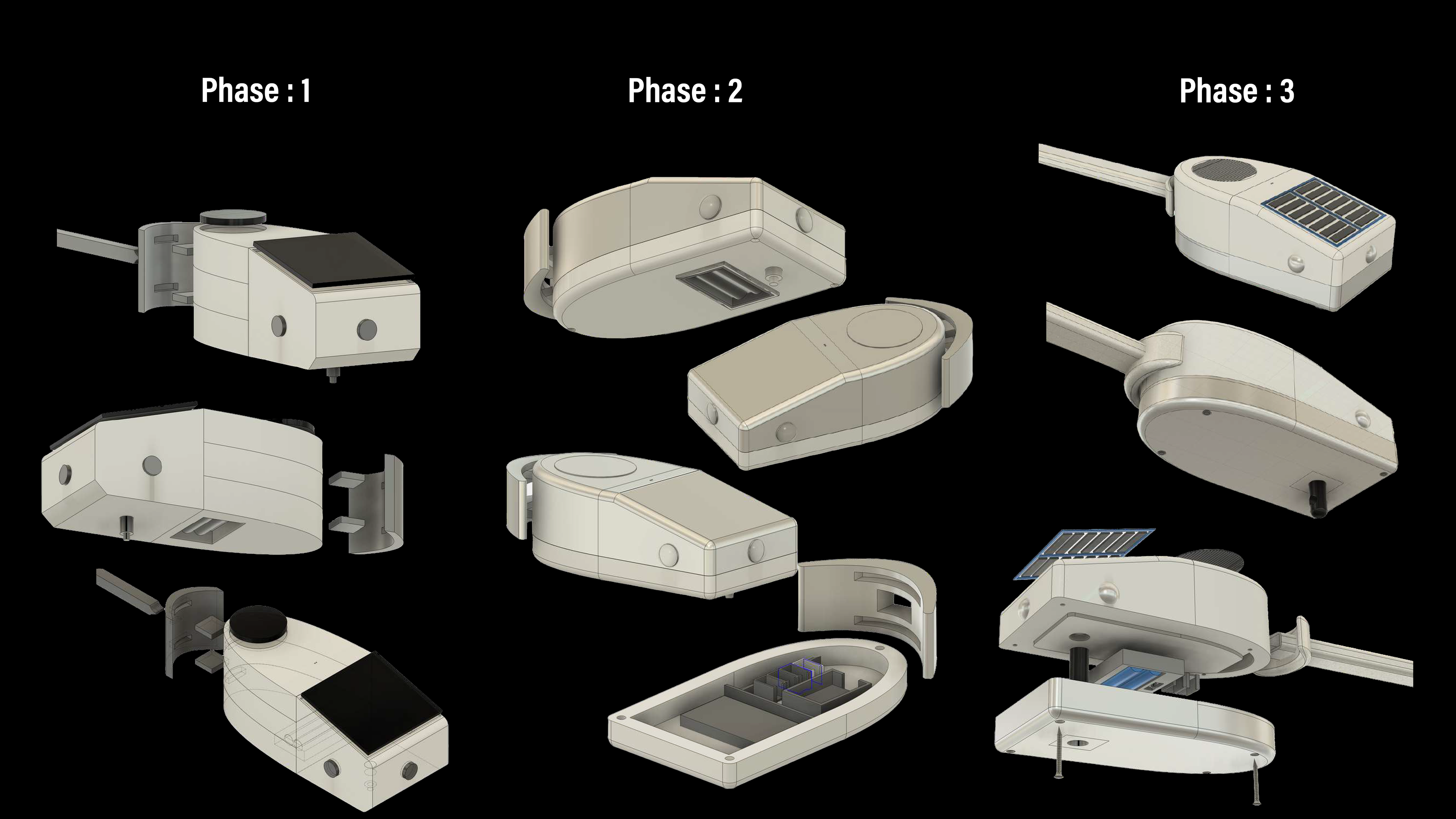
I started by developing multiple basic form directions to explore the product’s proportions, functionality, and overall character. Through each phase, I refined the shape based on feedback, the company’s visual identity, and manufacturing requirements. The forms gradually became more refined and cohesive, while considering details such as assembly, component placement, part separation, and manufacturability.
Product Interior Analysis
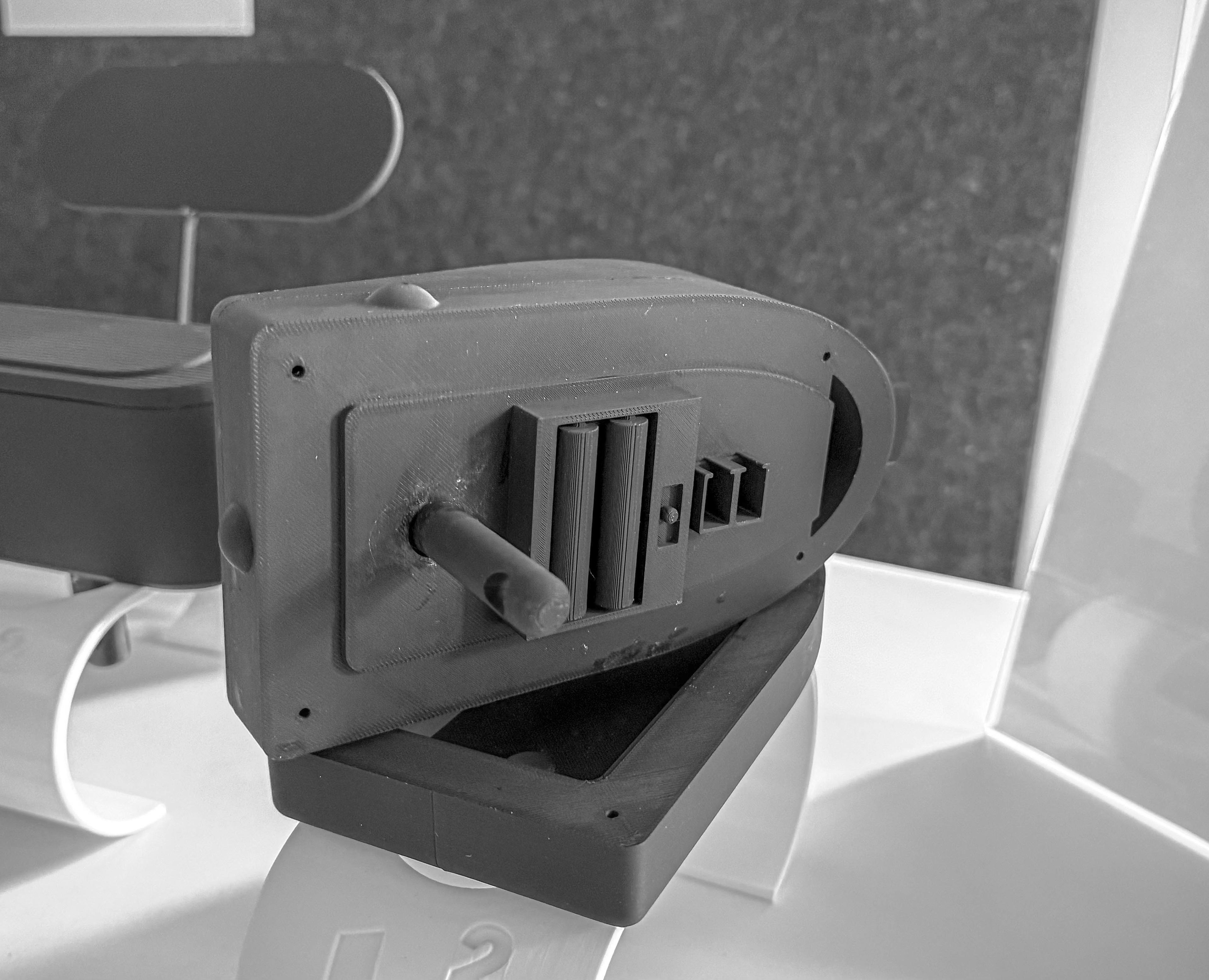
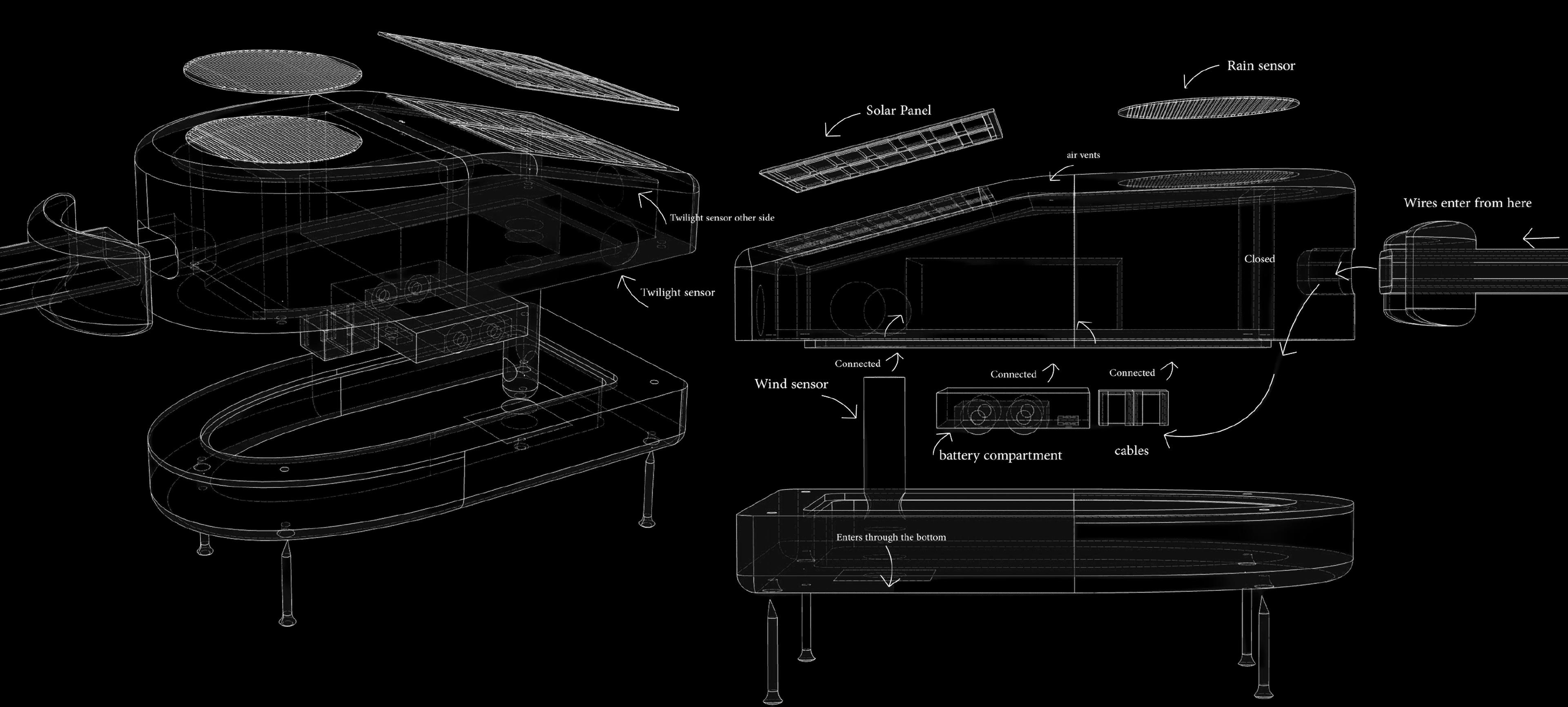
In this phase, I focused on understanding and organizing the internal components of the product. I mapped the exact placement of each sensor and studied how the wires route through the housing and connect to the central control panel. I also considered the placement of the battery compartment, cables, solar panel, and air vents, ensuring that the internal layout worked efficiently while supporting the overall exterior design.
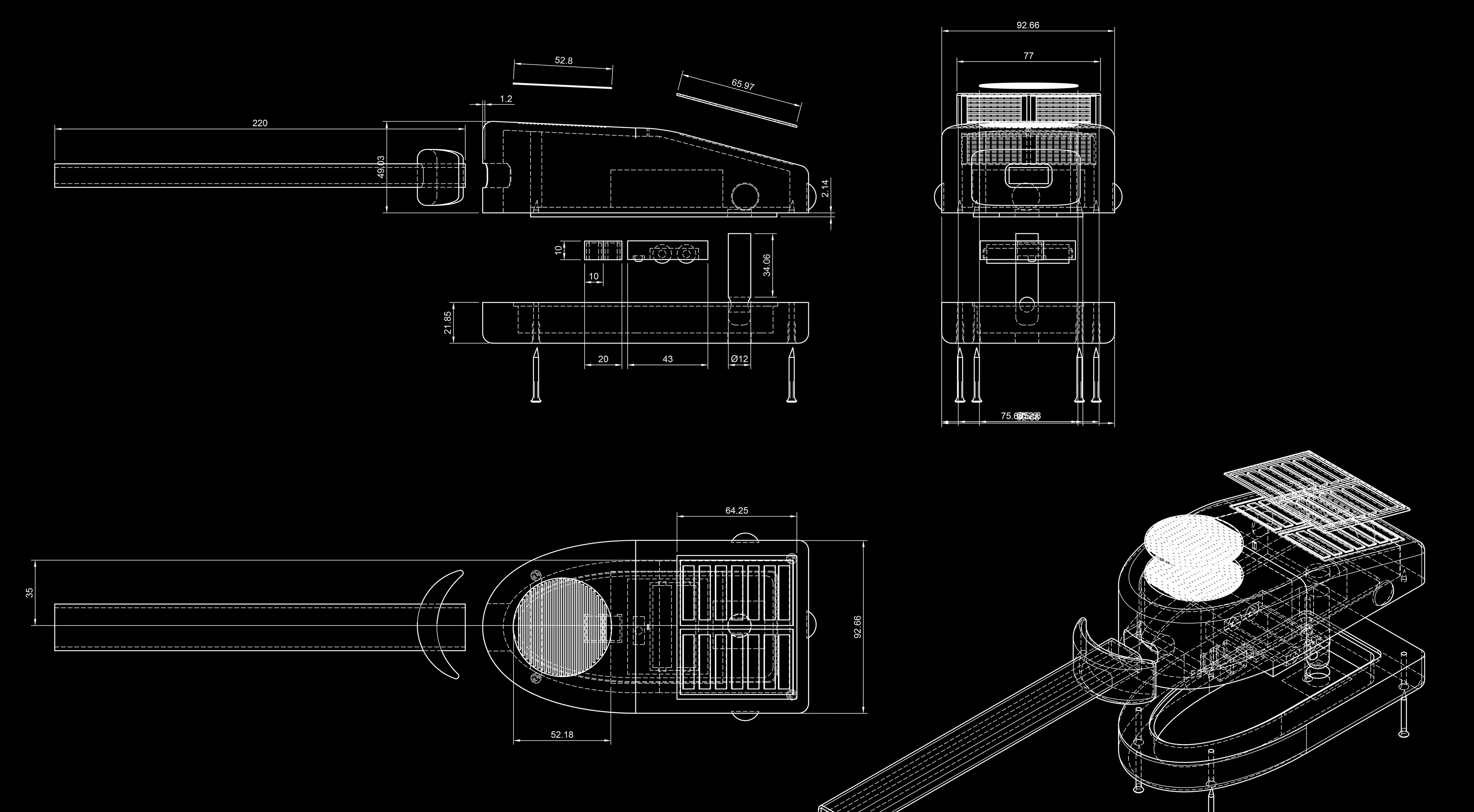
Technical Drawings & Dimensions
Product Visualization
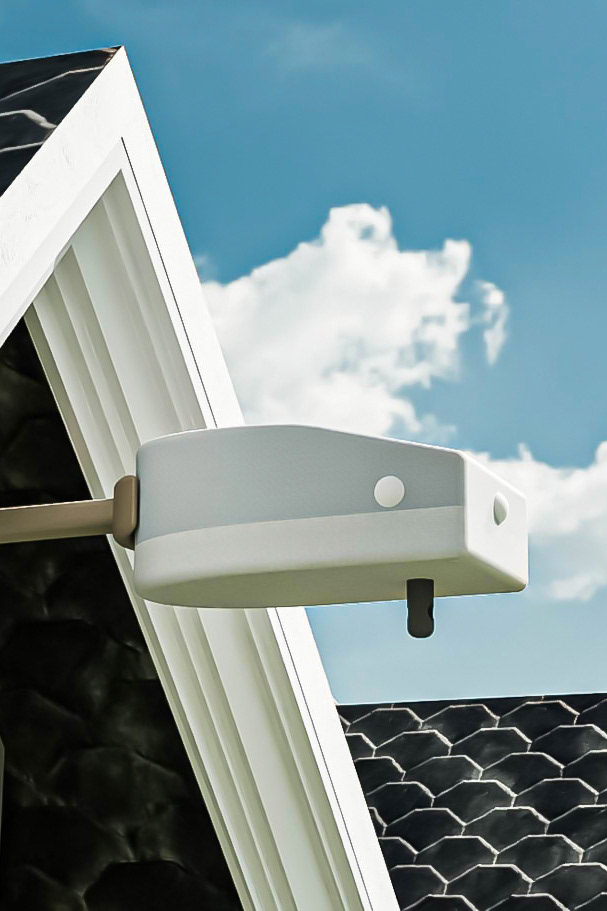
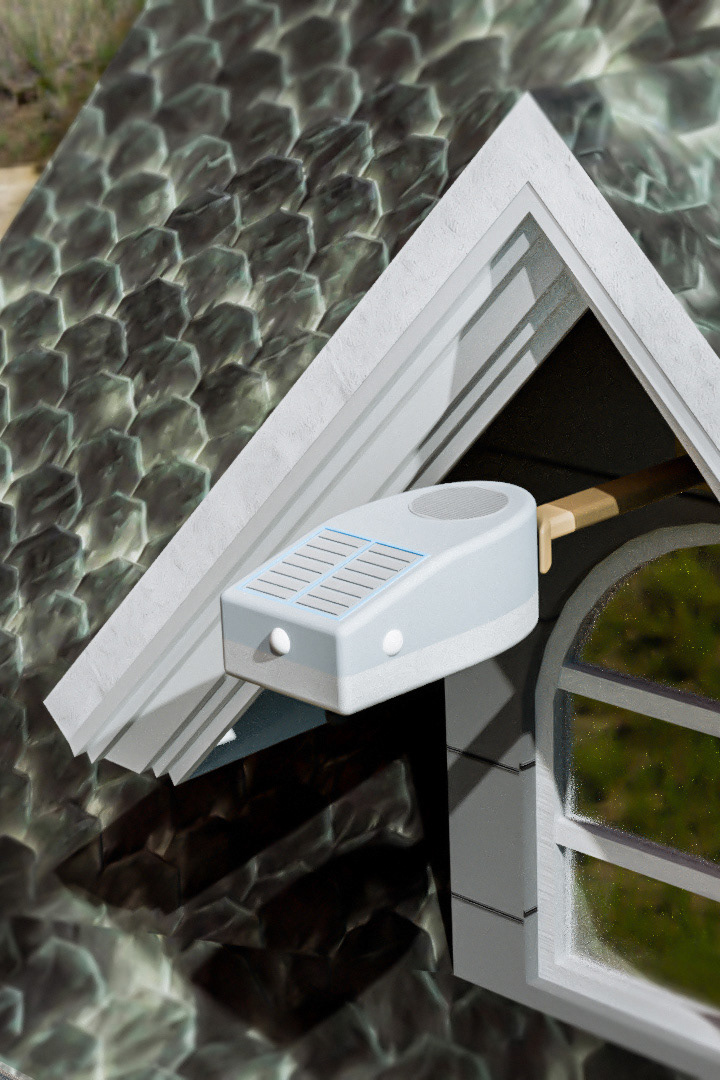
I created Blender renders to visualize the product in a realistic home environment, showing how it would be mounted on a house exterior wall. The renders helped communicate the product’s scale, proportions, placement, and overall appearance within its intended context.

Final Prototype
This was the third 3D-printed prototype, produced in PLA material and incorporating the final design refinements. It was used to present the product during the company’s final meeting and was also displayed in the Hochschule year-end gallery as a representation of the completed project.