A whole identity for a Levantine kitchen in Amman
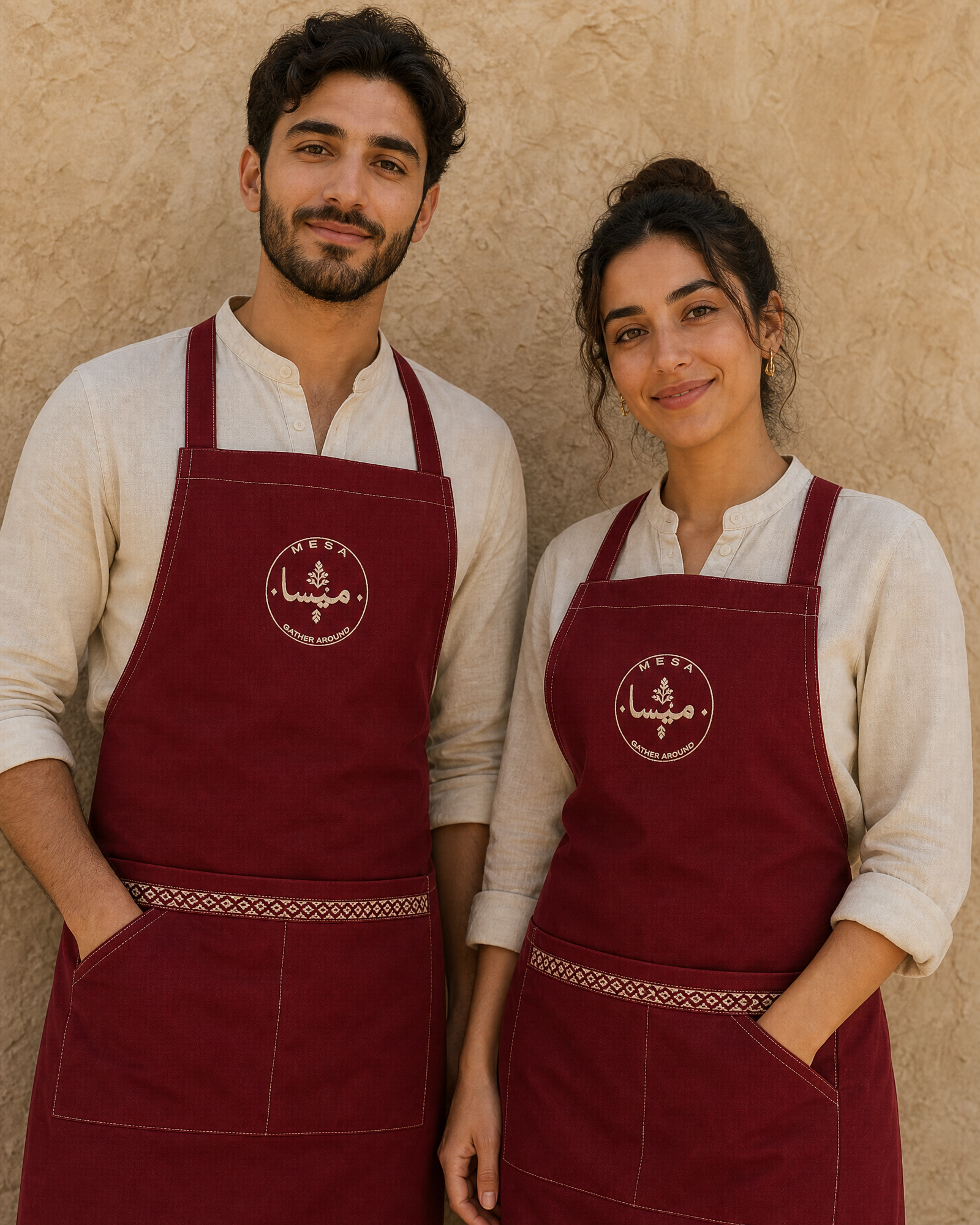
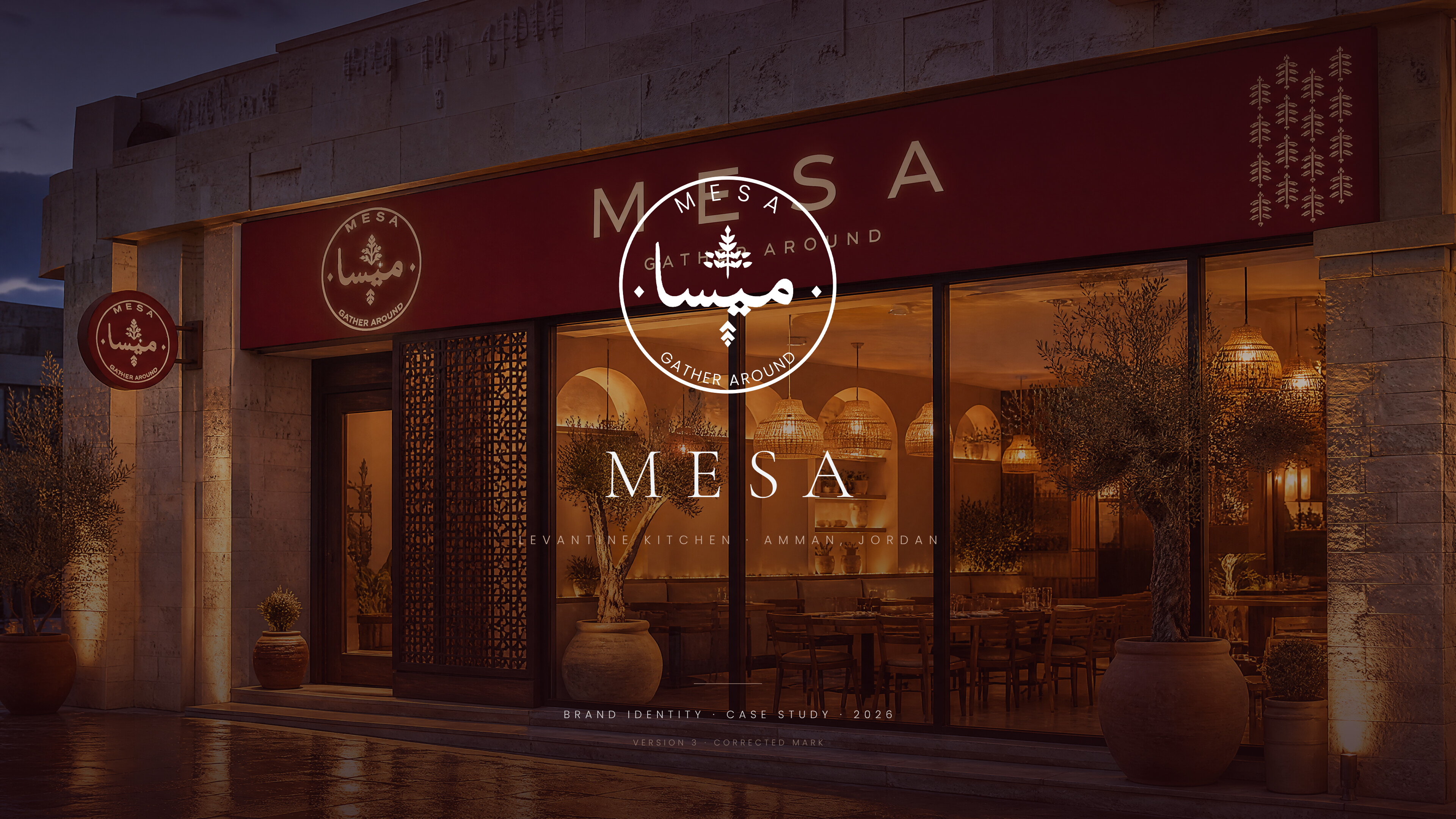
MESA is a modern Levantine restaurant on Rainbow Street, Jabal Amman. It serves the food people in this region grew up eating, in a room built for staying late. The identity had to feel like that: rooted, generous, quietly confident, and legible in two scripts at once.
Levantine, without the clichés
Amman is full of restaurants that signal "authentic" with the same four moves: a hand-drawn script, a bowl of spices, an arch, a lot of gold. MESA wanted the opposite - an identity with the restraint of a European house and the memory of a Levantine one.
Three problems to solve: an Arabic and Latin lockup that carry equal weight rather than one translating the other; a graphic language that reads as regional without borrowing a postcard; and a system that survives being printed on a kraft box by a supplier who will not call to check the Pantone.




The Symbol
The Cypress, Redrawn
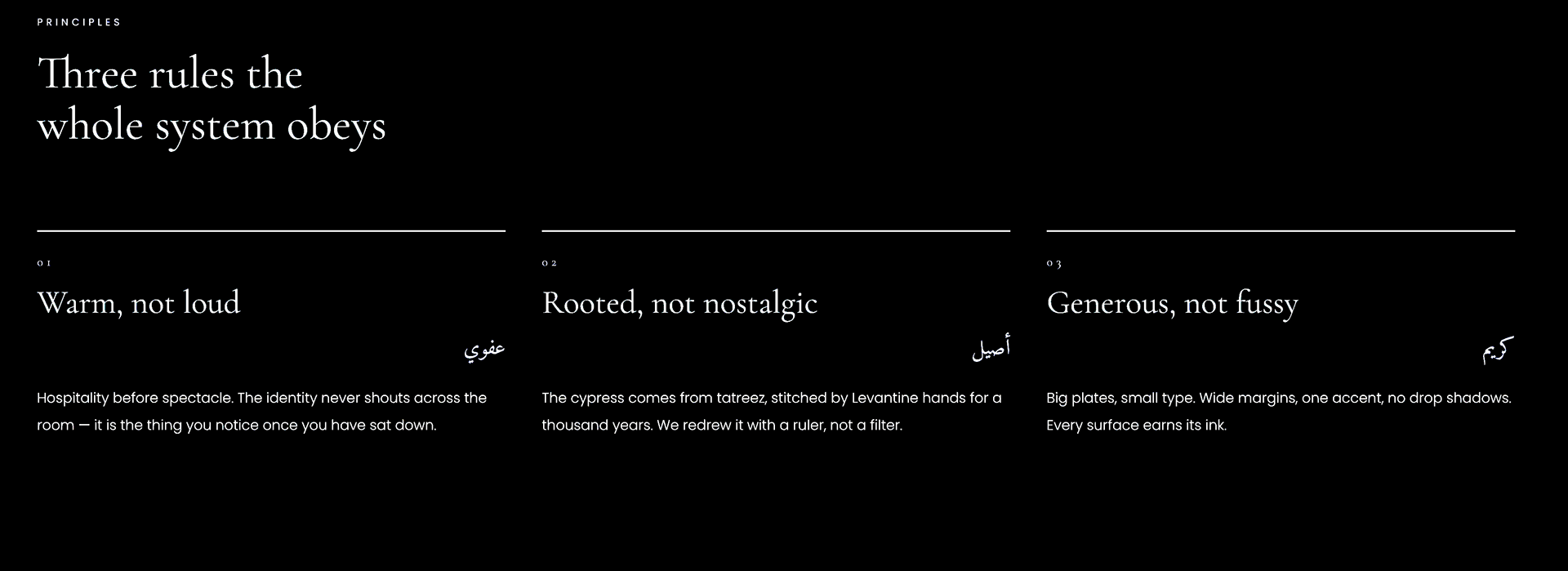
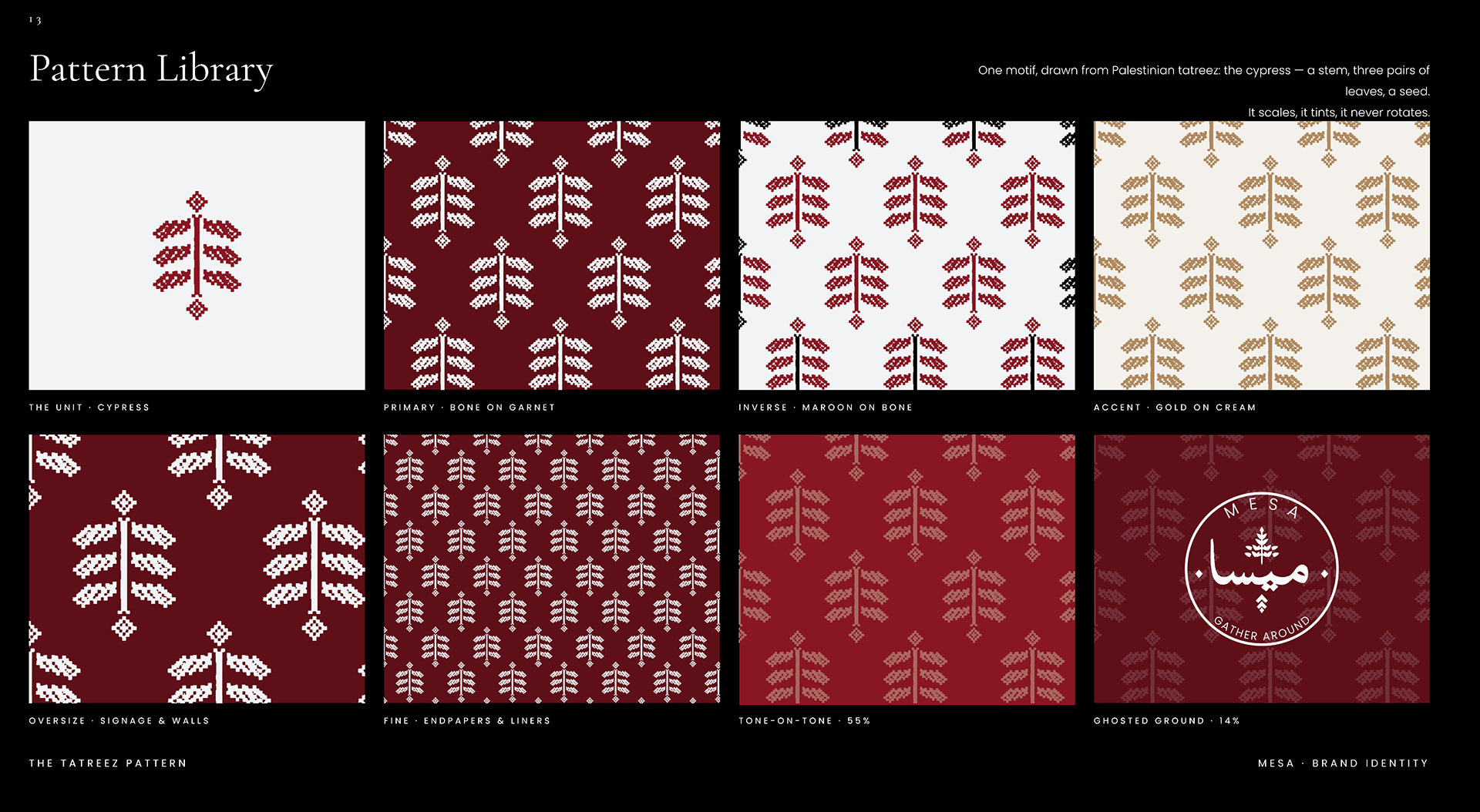
In Palestinian and Jordanian tatreez, the cypress is a traditional motif often stitched onto women’s thobes as a symbol of long life, stability, and a deeply rooted family. It is one of the oldest motifs found in the region.
Traditionally, the cypress is built on a strict cross-stitch grid: symmetrical, geometric, and made without curves. Every stitch follows the structure of the grid, creating a pattern that is both decorative and meaningful.
For this identity, the original motif was redrawn by hand, preserving the character and proportions of the traditional stitch while adapting it into a contemporary symbol.
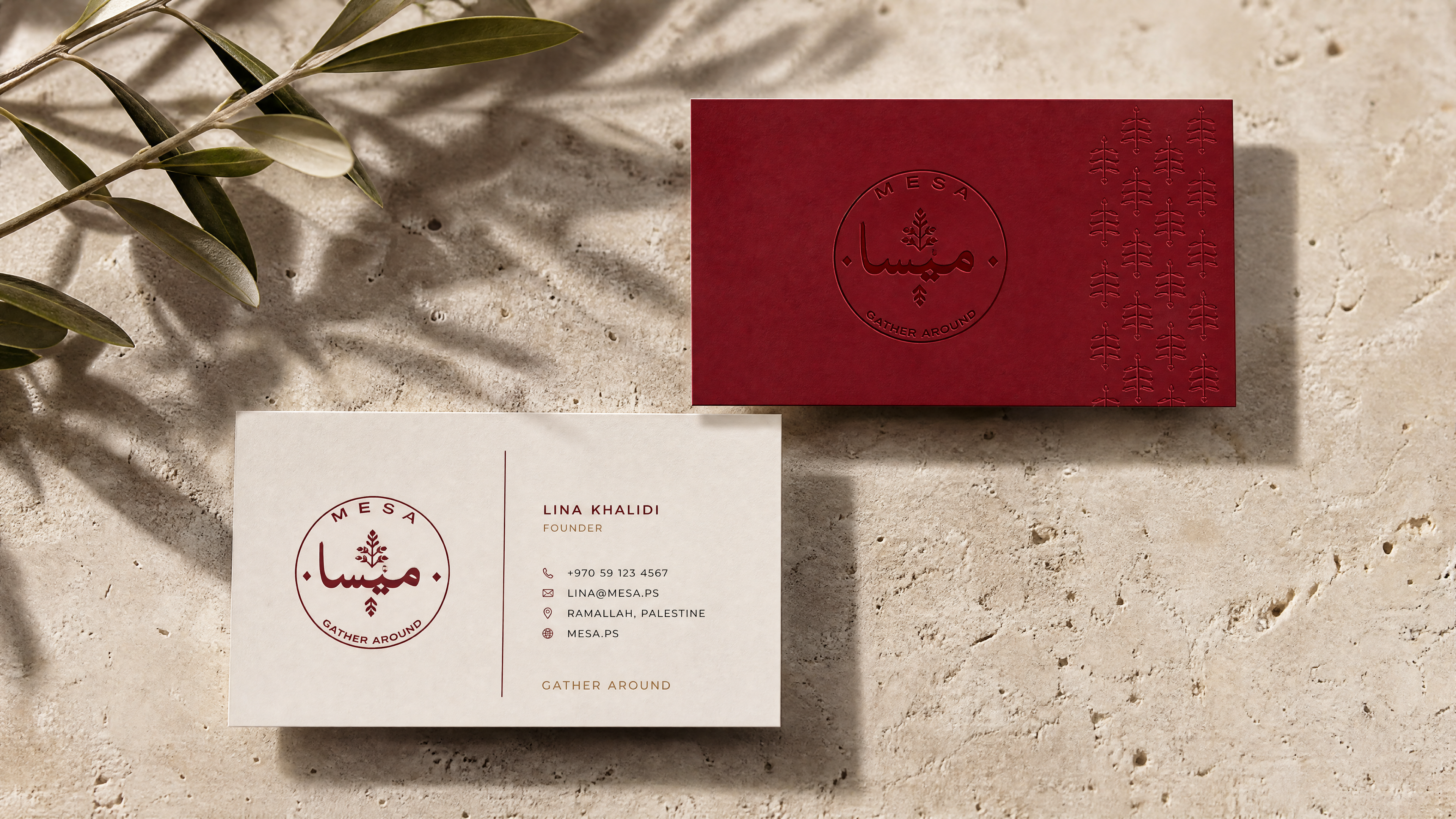
The pattern remains faithful to the counted-stitch structure, while the seal is simplified enough to work at very small sizes. This allows the symbol to remain recognizable at 20 mm on a business card, while the full pattern retains its presence at two metres on a wall.

Menu, Business Card, Packaging Design Mockups